

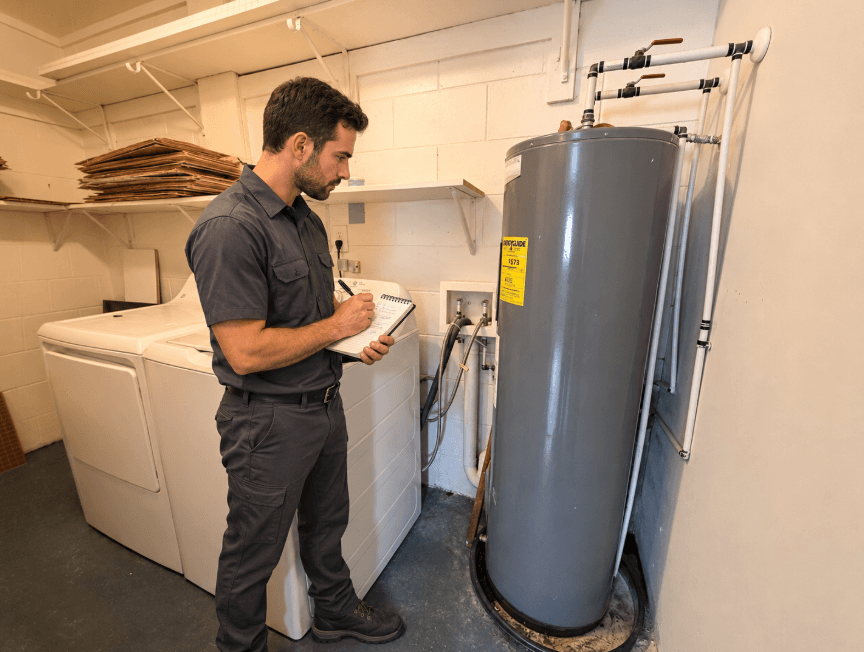
- Diagnose no hot water, short hot-water cycles, rumbling and visible leaks.
- Check electric heating elements, thermostats and gas ignition components as applicable.
- Assess valves, anode rods and sediment flushing when the tank is still serviceable.
We do water heater repairs and installs differently at Hollywood Water Heater. Our method is different. We first diagnose the issue prior to recommending any services.
Our Services Include
We have over 15 years of experience with project management, business oversight, and installs. With modern technology, tankless water heaters have become popular in Hollywood, FL, for good reason. A storage tank can still be the best solution for some homes. We explain both options so homeowners can make an informed decision.
| Service | Budget Range | Scope |
|---|---|---|
| Common tank repair | $125–$425 | Common storage tank component repair. Parts and labor depend on the diagnosed fault. |
| Tank flush and maintenance | Call for pricing | Routine sediment flushing and maintenance for a serviceable tank. |
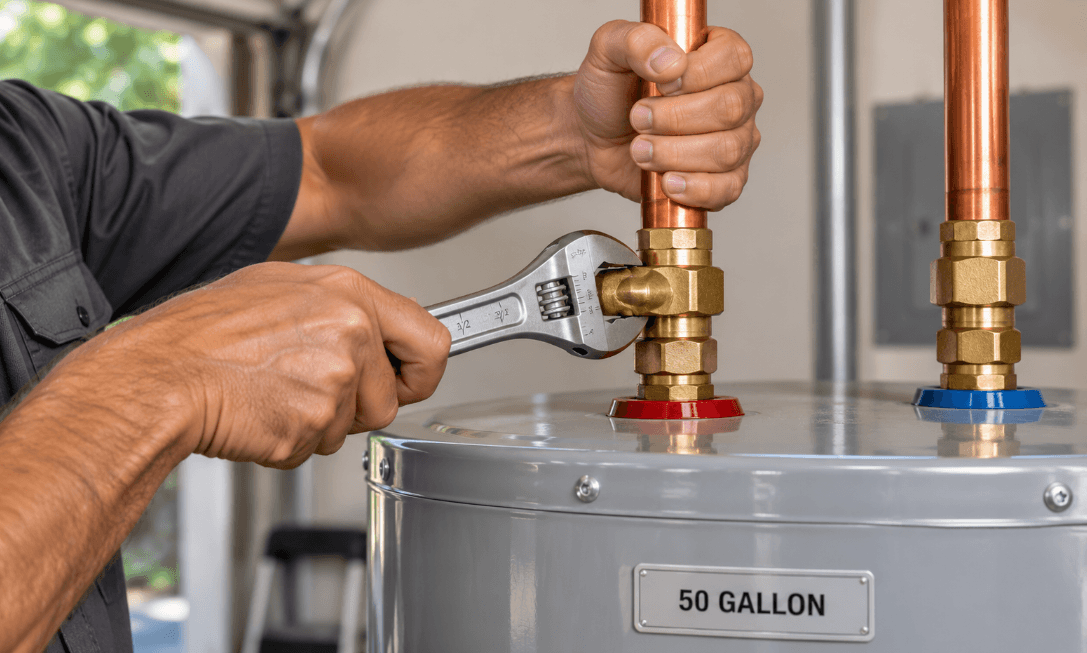
| Standard tank installation or replacement | $1473–$1764 | Standard 40 or 50 gallon electric tank swap with compatible connections. Includes equipment and labor. Confirm permit fees, disposal, and connection updates in the quote. |
| Tankless repair | Call for pricing | Pricing depends on the diagnosis, the model, and the parts needed. |
| Tankless installation | $1775–$2775 | Gas tankless equipment and standard installation labor. Gas line, vent routing, and condensate changes require a site-specific quote. |
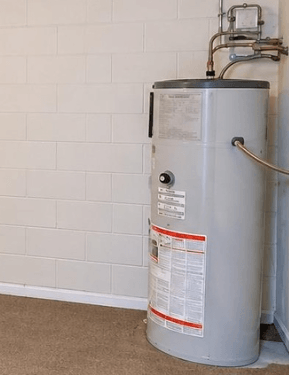
Fix the failed part when the tank still holds water and meets your needs.
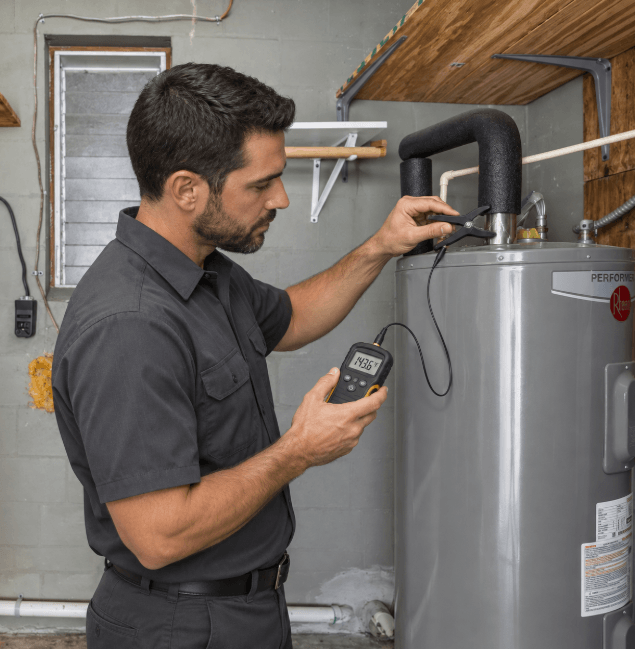
Start with what changed. If one shower runs cold while the other taps stay hot then check the shower fixture first. If every tap runs cold then look at the heater and its supply. On a typical two element electric tank a failed lower element can leave you with a short burst of hot water followed by cooler water. An upper element or thermostat fault can take away most or all of the heat. A technician can test the elements and thermostats and replace the bad part. On a gas model a worn igniter or flame sensor may keep the burner from starting or staying lit. The model and test results tell you which part to address.
Trace moisture upward before you condemn the tank. A loose connection at the top can send water down the jacket and make it look like the base is leaking. A drain valve may drip because grit keeps it from closing fully or because its seal has worn out. A technician can repair the connection or replace a faulty valve if the tank and its threads are sound. A relief valve needs a different check because it may be responding to excess pressure or temperature. Find out what triggered it before replacing it.
Read the manufacture date and ask how the heater has performed lately. An older tank that stays dry and keeps up with demand may still justify a simple thermostat or element repair. A much newer tank can develop corrosion or a leak if its protective anode wears out early or its system puts it under excess pressure. Check the tank condition, service history, part availability, and warranty before you decide. Age matters most when you weigh a costly repair against the chance that another part may fail soon.
Choose a new tank when the vessel leaks or the current setup no longer fits the home.
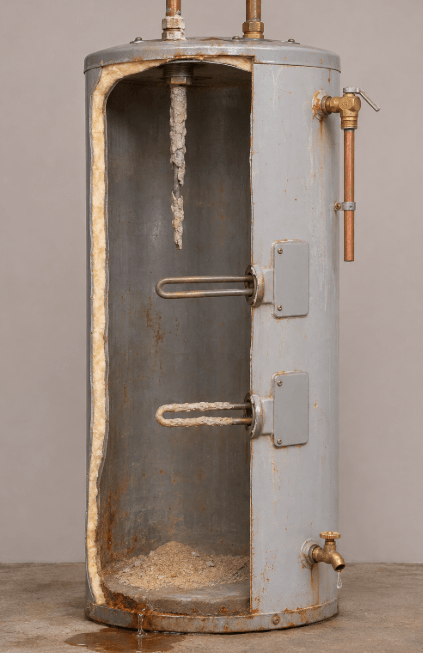
A puddle at the base can come from a valve or pipe above the tank. A technician should trace the leak before recommending replacement. Once water escapes through the tank wall or a welded seam the vessel has failed. Replacing a fitting or anode will not restore that wall. Rust around the base may point to long term moisture from an external leak or corrosion inside the tank. Rust colored water can also come from supply pipes. Look at where the rust appears and whether the cold taps show the same color before drawing a conclusion.
The anode rod gives up its own metal to help protect exposed steel where the tank lining does not cover it. Once the rod wears down the steel loses that protection and corrosion can eventually eat through it. Mineral deposits also settle at the bottom. They can cause rumbling and block the drain before the tank itself fails. A closed plumbing system adds another possibility. Heated water expands and pressure can climb if that expansion has nowhere to go. If a heater fails early or the relief valve keeps discharging then check for pressure or expansion problems before installing the next unit.
Keep the existing location and fuel type when they still work for the home. A direct swap can limit changes to plumbing and utilities. If the old tank ran out after the second shower even while it worked properly then compare first hour ratings before buying another tank with the same gallon capacity. That rating combines stored hot water with the amount the heater can recover during its first hour. Check the new tank dimensions and the path through the doorway. Ask whether the estimate includes the unit, removal, connection changes, and the plumbing permit Hollywood requires. At a condo, check with management about a building shutoff and elevator access before scheduling the swap.
Gain floor space and heat water on demand if your home can support the setup.
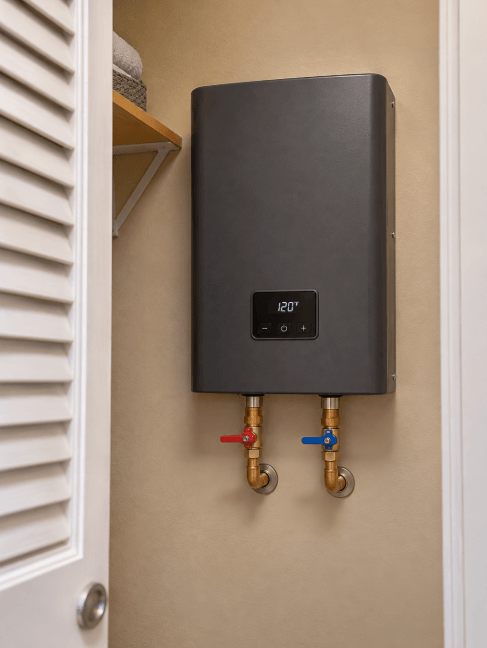
A wall mounted heater can free up the corner where a storage tank stood. That may be valuable in a laundry room or utility closet where floor space is tight. The unit heats water as you draw it so you do not keep a full tank hot between uses. It can also keep supplying hot water during a long shower as long as the demand stays within its capacity. It does not make a distant faucet hot instantly. Water sitting in the supply line still needs time to clear. If that wait matters then ask whether the model and plumbing layout can support recirculation.
Size a tankless heater for the fixtures you actually run together and the temperature rise the heater must deliver. An inlet at 75°F needs a rise of 45°F to reach a 120°F outlet. At the same flow, heating 55°F inlet water to 120°F takes about 44% more heat. These temperatures show why the inlet reading at the property matters. A unit with a fixed maximum output generally supplies fewer gallons per minute as that required rise increases. Compare each model at the expected cold inlet temperature and peak flow so a second shower does not push the unit beyond its capacity.
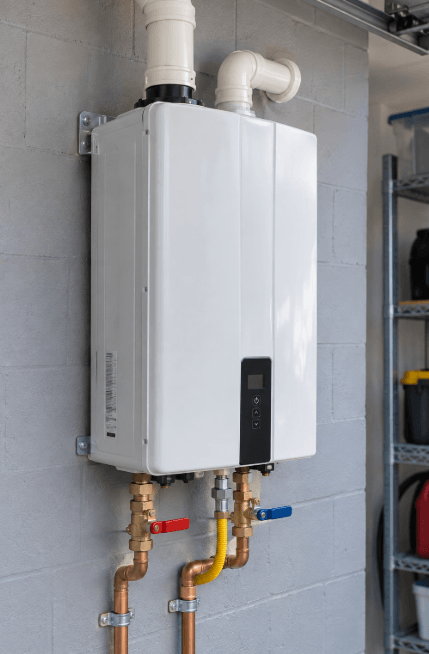
An existing gas connection helps only if the line and meter can deliver the required input while other appliances run. A gas unit also needs a suitable vent route or approved outdoor location. A condensing model may need condensate drainage. A whole home electric unit can require several dedicated circuits and enough panel and service capacity to support them. Include those upgrades in the estimate. A tank can still be the better choice if a straightforward replacement meets the household demand and avoids major utility work. Also compare model specific maintenance and running costs. Saving floor space does not automatically make a conversion cheaper.
Possible causes include depleted storage capacity, an element fault, low tankless flow or a mixing issue. Note which fixtures are affected and when the temperature changes.
Include your ZIP code, heater type, and the symptoms or work you need. Add the model number if visible and mention any access restrictions.
The table gives budget ranges for the listed scope. Your unit, access, parts, disposal, permits and utility changes can affect the price you are quoted.
Yes. The City of Hollywood requires a plumbing permit for water heater installation or replacement. For a condo, also confirm the association’s shutoff, access, and work-hour rules.
Measure the cabinet and the path to it. Check where the building shutoff is, whether management must be present, and whether the new model leaves enough space to reach the controls and drain.